Basement ceiling ideas that work around ducts and low joists
Most basement ceilings fight three things at once: ductwork, plumbing you still need to reach, and a height that leaves little room to lose. These ten options start with what each one costs per square foot and how much headroom it takes.
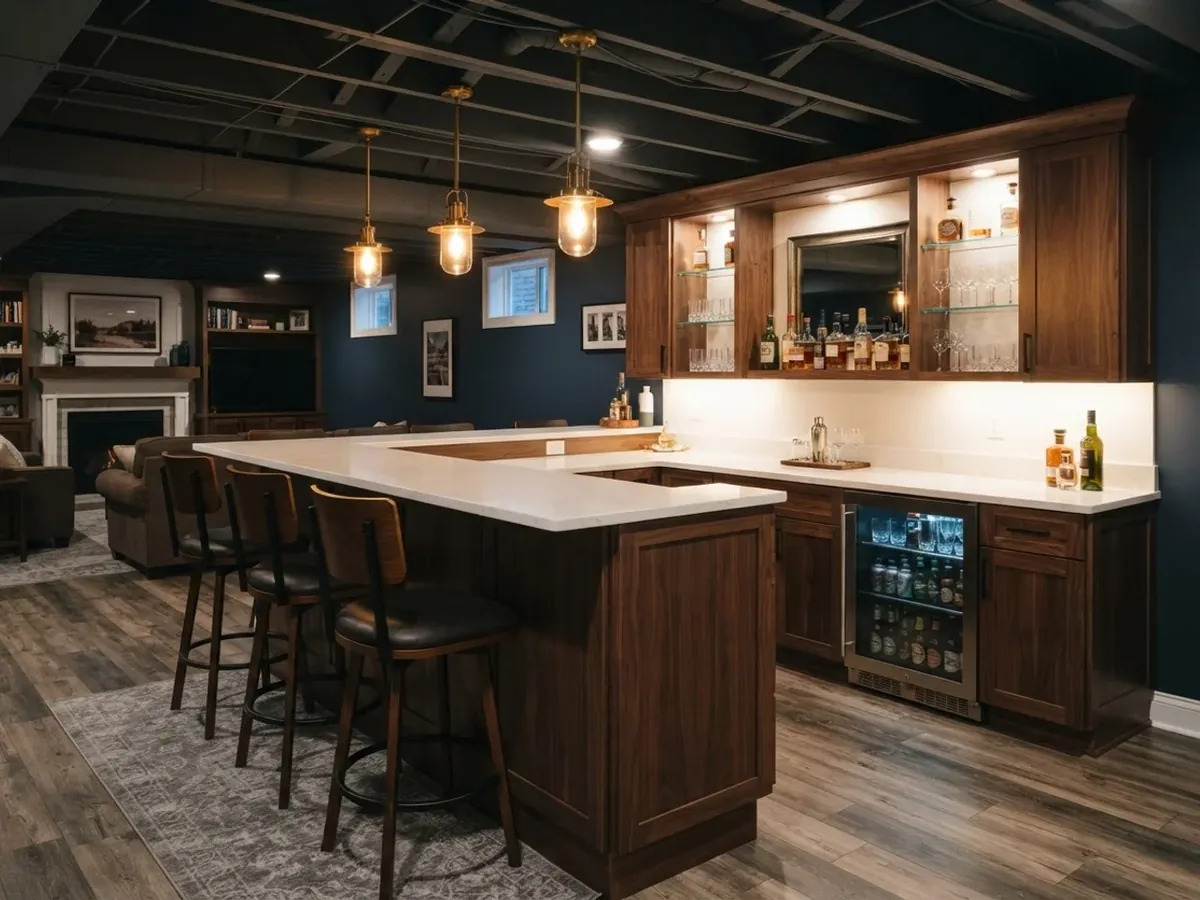
1.Paint the exposed joists one dark color
The cheapest finished look is the one already above you. Clean the joists, wrap or remove loose wiring, and spray everything (joists, ducts, pipes, subfloor) one color, usually black or charcoal. Dark paint makes the clutter recede and keeps every inch of height. Expect $1 to $2 per sq ft if you rent a sprayer and do it yourself. Check local code first: some areas require a fire-rated barrier under joists in finished spaces.
2.Paint the exposed joists white for a brighter room
White or light gray paint on exposed joists reads like an industrial loft instead of a cave, and it bounces more light around a low room. It shows dust and cobwebs more than black, so budget for a yearly vacuum with a brush head. The cost is the same as the dark version, but you will want a stain-blocking primer on old wood so tannins and water marks do not bleed through.
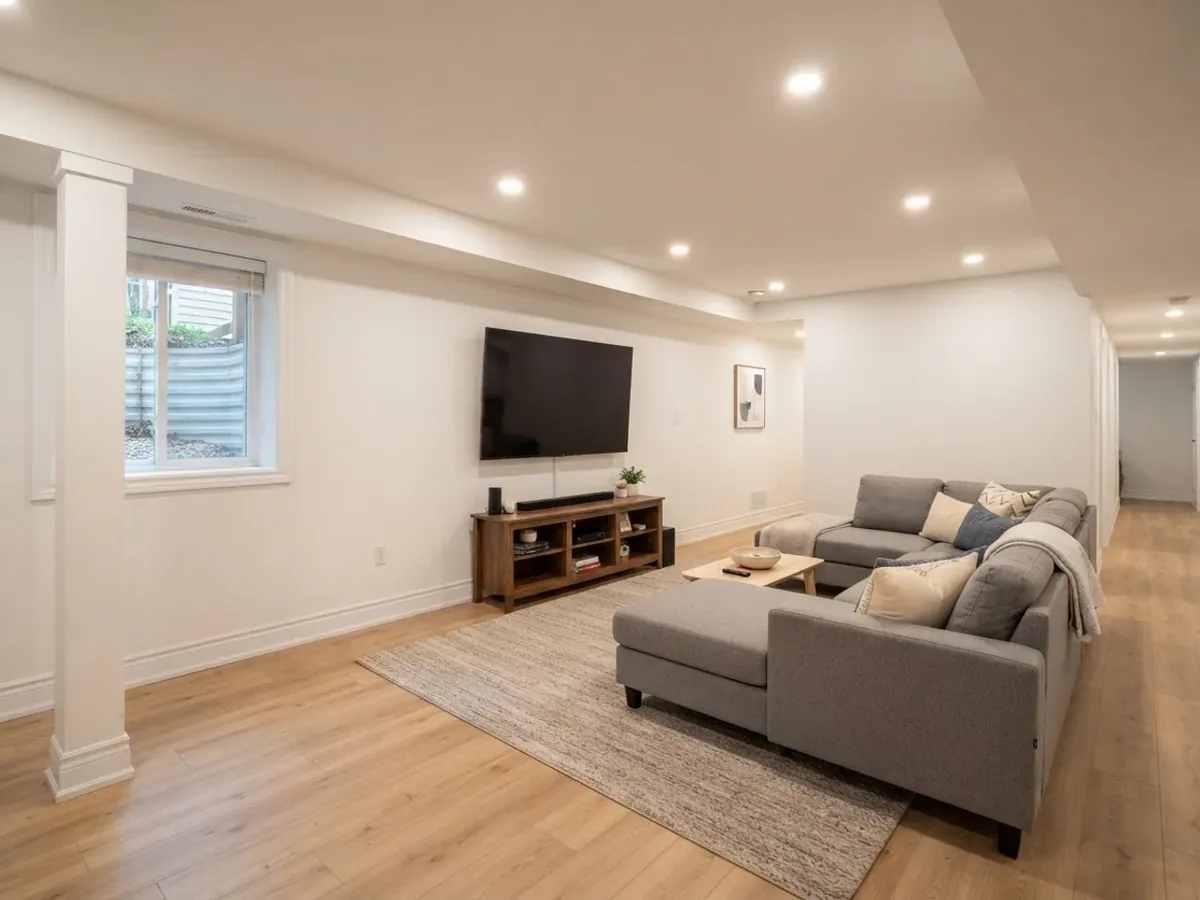
3.Drywall the ceiling for the most finished look
Drywall is what makes a basement feel like the rest of the house. It costs about $2 to $3.50 per sq ft installed for hang, tape and a flat finish. Plan soffits (boxed bulkheads) around main ducts and beams rather than raising everything to the lowest point. Leave access panels at every shutoff valve and cleanout; inspectors and future plumbers will look for them. Use 5/8-inch Type X if your code calls for a fire separation.
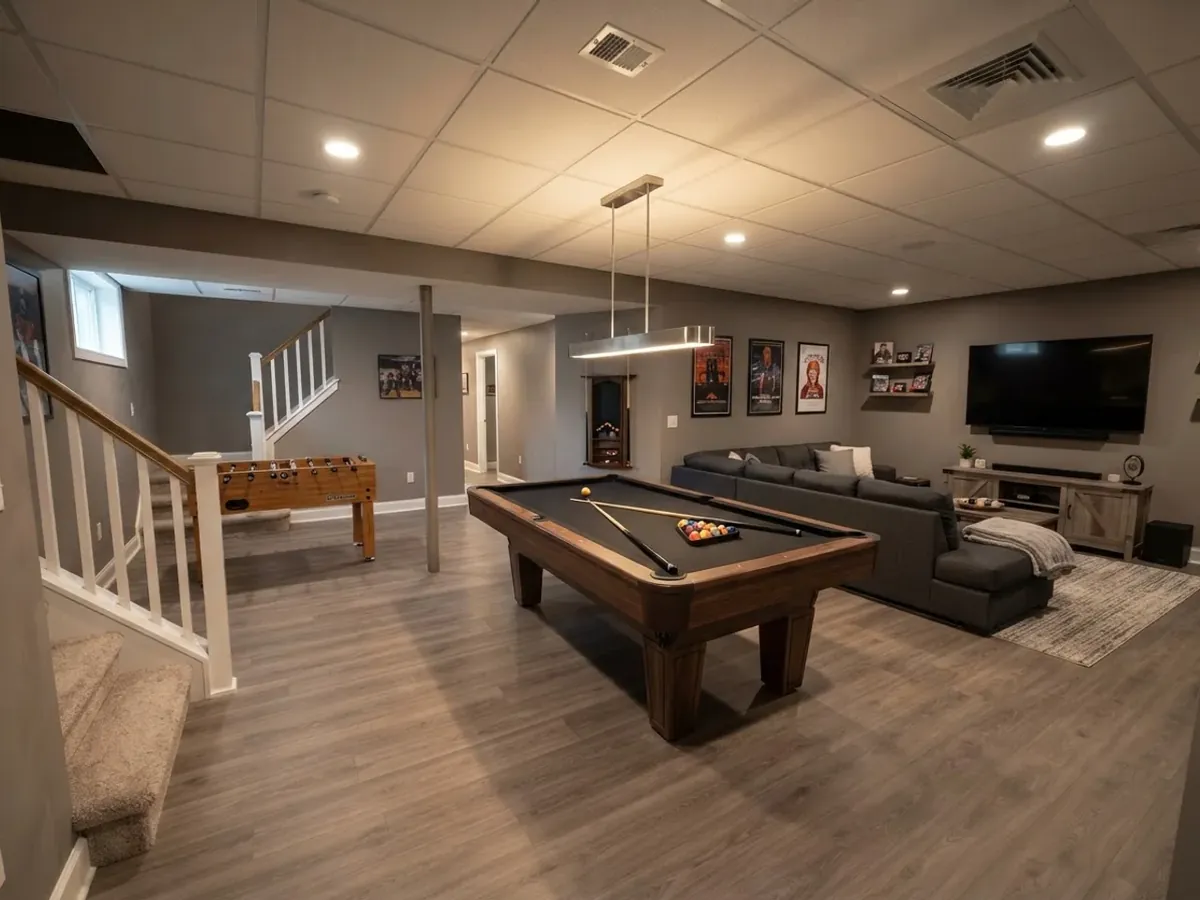
4.Install a drop ceiling where you need access
A suspended grid with 2x2 or 2x4 tiles keeps every pipe, valve and junction box one tile away. Modern tiles come in smooth, wood-look and coffered styles that look far better than old office ceilings. Installed cost runs about $5 to $10 per sq ft. The catch is height: the grid needs 3 to 4 inches below the lowest obstruction, so it only works where you have room to spare, typically 7 feet 6 inches or more.
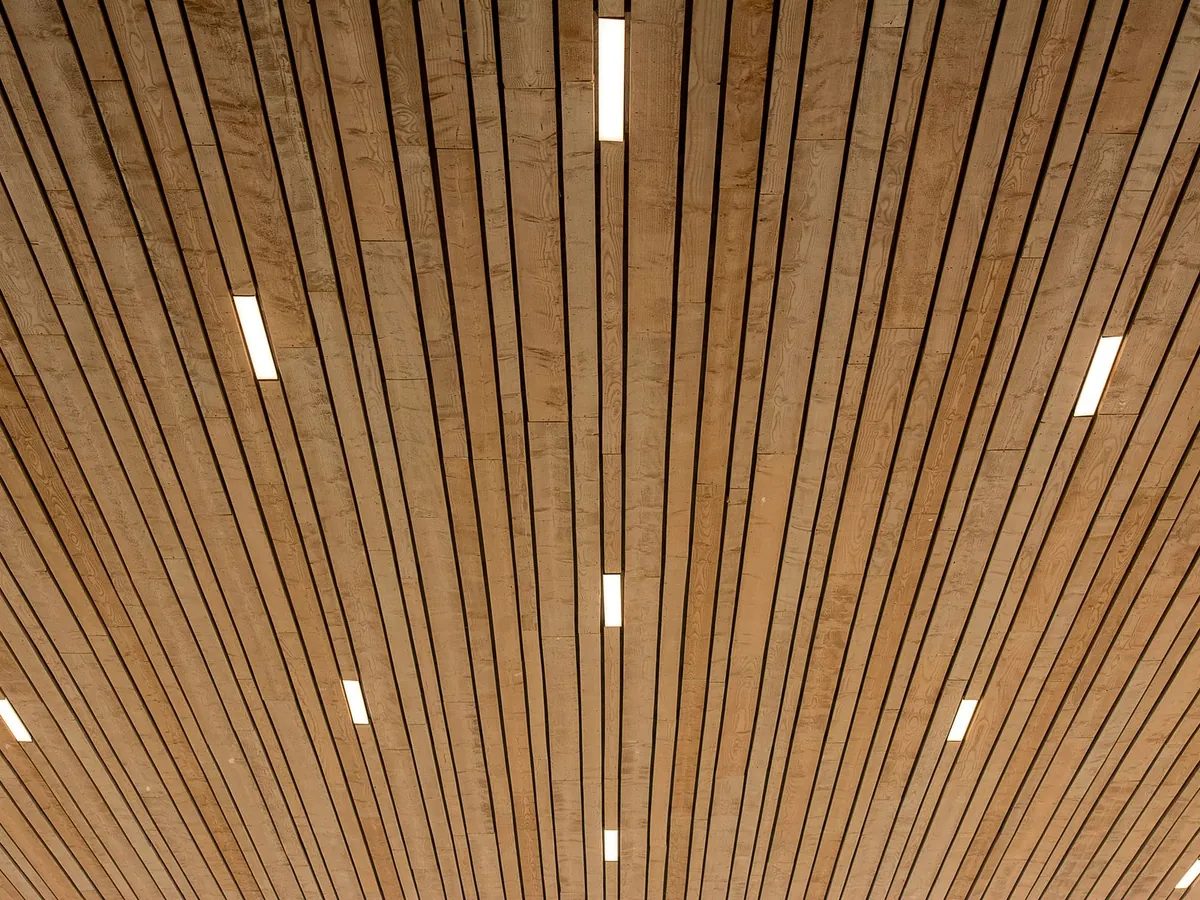
5.Use wood planks or tongue-and-groove
Pine or cedar tongue-and-groove, or thin engineered planks, give a basement warmth that drywall cannot. Boards install directly on the joists, or on furring strips where joists are uneven, and run about $4 to $10 per sq ft depending on species and finish. Run them the long way of the room to make it feel bigger. Leave removable sections near valves, and seal or prefinish the wood because basements stay more humid than upstairs.
6.Box the ducts into a clean soffit
Instead of fighting a long trunk duct, frame a straight soffit around it and treat it as a design line. A soffit that runs the full length of the room looks intentional, especially if you paint it the wall color or wrap it in the same wood as an accent wall. Framing and drywall for a soffit run about $20 to $40 per linear foot. Keep the bottom flat and level so it reads as architecture, not a patch.
7.Add a coffered or beamed ceiling in a media room
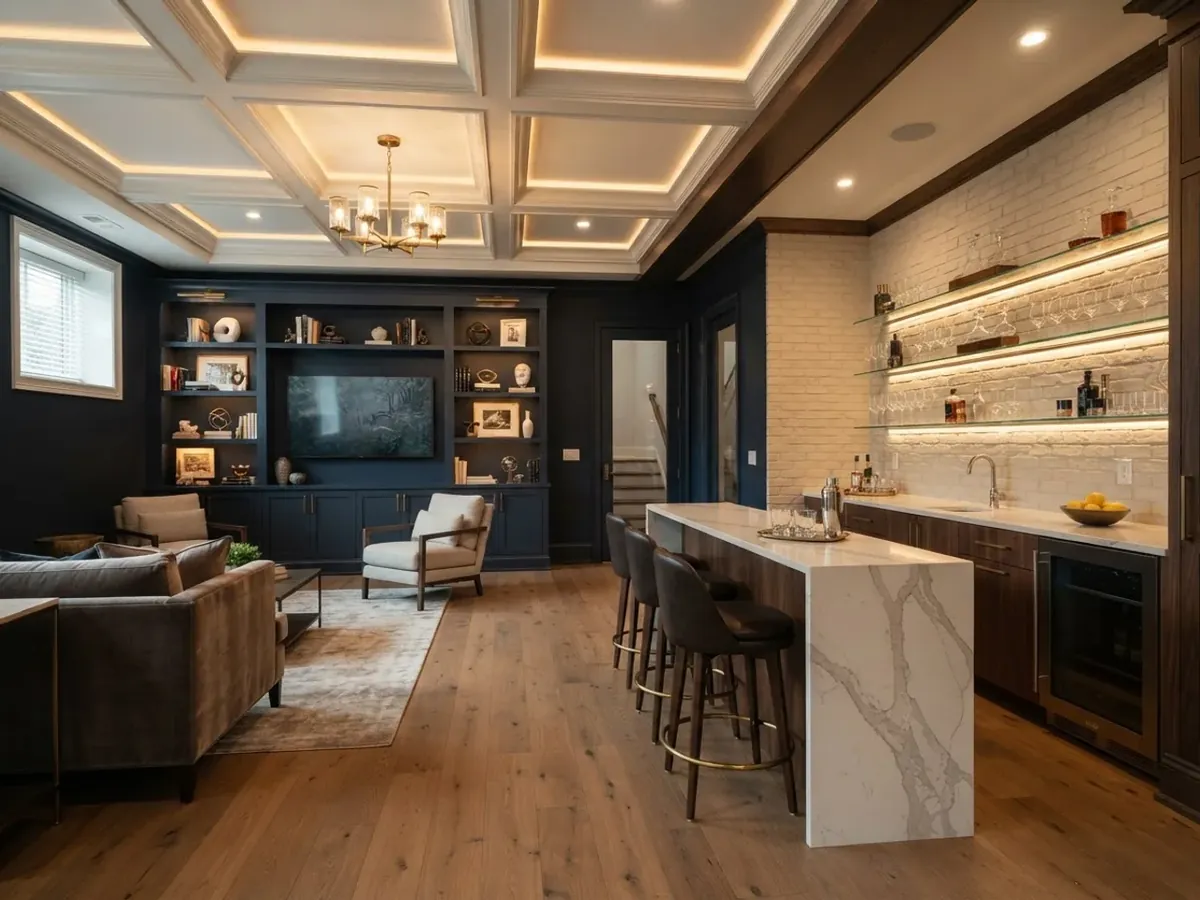
Faux beams made of hollow wood or polyurethane create a coffered grid that hides the line between drywall sections and adds depth. They weigh little, glue and screw to the drywall, and run about $10 to $15 per sq ft installed. Beams 4 to 6 inches deep are enough; deeper ones eat headroom. Paint the coffers a shade darker than the beams for a quiet, theater-like feel.
8.Try acoustic panels over a theater or music room
Fabric-wrapped acoustic panels or a slatted wood ceiling with felt backing cut echo and keep sound from carrying upstairs. For real sound control, start below the panels with insulation between the joists and resilient channel under the drywall; the panels then handle the room's own echo. Decorative acoustic slat panels cost about $15 to $30 per sq ft, so most people use them only over the seating area.
9.Use corrugated metal or beadboard for a rustic room
Galvanized corrugated metal sheets give a bar or man cave an industrial edge for about $3 to $6 per sq ft in materials. Beadboard panels, which come in 4x8 sheets, give a cottage look at a similar price and go up faster than individual planks. Both are thin, so they hold onto every inch of height. Cut access hatches into a frame of trim so they can lift out cleanly.
10.Light the ceiling instead of decorating it
Sometimes the best ceiling idea is light. Thin LED wafer lights (about half an inch deep) install in drywall without bulky cans and need no attic clearance. In an exposed ceiling, run a string of track lights or LED strips along a joist bay. Plan one fixture roughly every 4 to 6 feet and put the lights on a dimmer. Good light makes a plain ceiling disappear, and bad light makes even an expensive one feel low.
Frequently asked questions
What is the cheapest way to finish a basement ceiling?
Painting the exposed joists, ducts and pipes one color with a paint sprayer is the cheapest finished look, usually $1 to $2 per square foot if you do it yourself. Check local code, because some areas require a fire-rated barrier under the joists in finished living space.
Is a drop ceiling or drywall better in a basement?
Drywall looks more finished and costs less, about $2 to $3.50 per square foot installed, but needs access panels at valves and cleanouts. A drop ceiling costs $5 to $10 per square foot and keeps everything reachable, but takes 3 to 4 inches of height.
How low can a basement ceiling be?
The International Residential Code generally requires 7 feet of ceiling height in habitable basement space, with beams, ducts and pipes allowed to drop to 6 feet 4 inches. Local codes vary, so check with your building department before you frame.
How do I hide ductwork in a basement ceiling?
Frame a soffit (bulkhead) around the main trunk duct and finish it with drywall or wood, keeping it straight and level so it reads as a design line. Smaller branch ducts can often be rerouted between the joists by an HVAC contractor.
More basement ideas
Not sure which idea fits your basement? Preview a few in the Basement Design app before you buy materials.