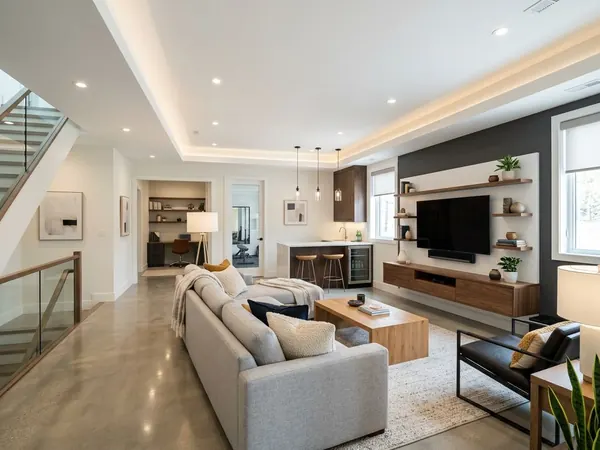
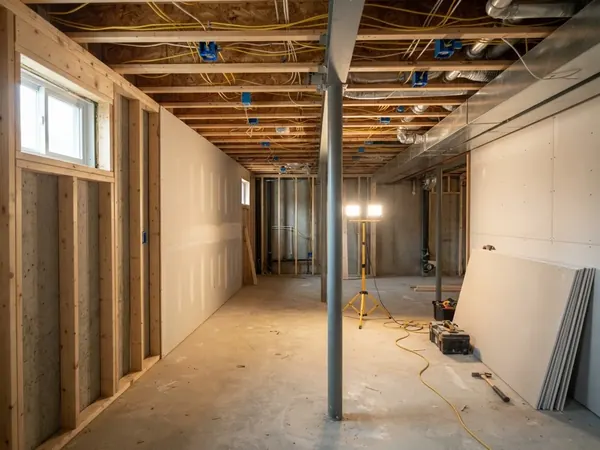
Then get the finishes right
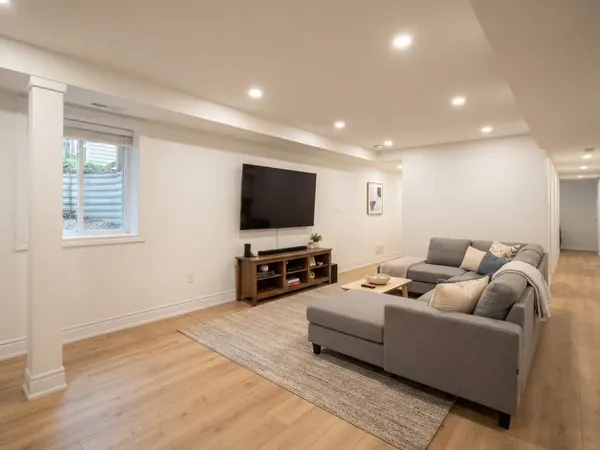
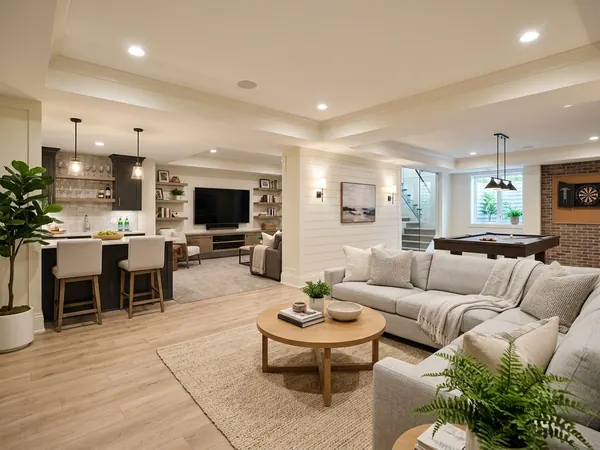
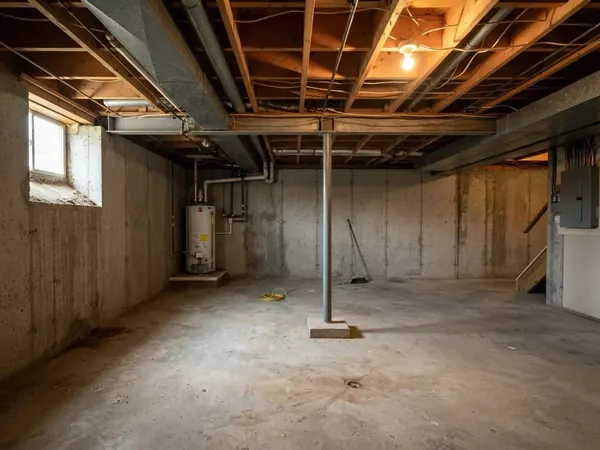
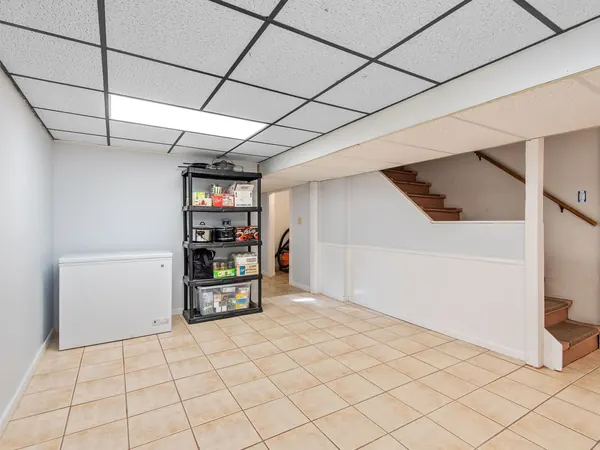
Below grade, the ceiling, walls and floor have to handle low height, ducts and moisture. These guides cover the options that hold up in a basement, with costs per square foot.
Room-by-room guides for the conversions most families build, plus the finishes that decide whether a basement feels like part of the house: ceilings, walls, floors, lighting and storage.
Most basement remodels start with one question: what will the space be used for? These are the six conversions families build most, each with a layout, the essentials and a realistic budget.
A basement is the best room in the house for a theater: no windows to black out, concrete mass that keeps sound in, and a footprint that fits rows of seating. The classic…
Concrete floors, cool temperatures, and separation from bedrooms make basements natural gyms. The formula: rubber flooring, mirrors on one wall, bright even lighting, and…
The basement bar is back, and it grew up: waterfall counters, brick or slat-wood backsplashes, glass shelving with LED underglow, and lounge seating instead of bar stools…
Pool table, arcade wall, card table, console corner: the basement game room is the most flexible room type, and the one where zoning matters most. The trick is giving eac…
A basement guest suite adds real function and real appraisal value, especially with a bathroom. The difference between a bed-in-the-basement and a suite people want to st…
The basement office solves the two things that ruin work-from-home: noise and interruptions. Done right it's the quietest room in the house. Done wrong it's a dim cave th…
Below grade, the ceiling, walls and floor have to handle low height, ducts and moisture. These guides cover the options that hold up in a basement, with costs per square foot.
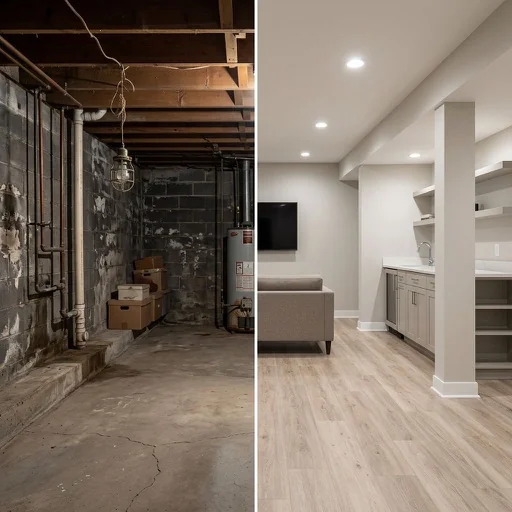
Snap one photo, pick a room type and a style, and get a photorealistic render that keeps your basement's real layout. Free to try on iPhone.